Italian Table Setting: Rules, Traditions, and Styled Inspirations

That’s why our creative MDMAISON team has gathered the most up-to-date information on Italian table setting, along with our conceptual examples and already realized projects that reflect the stylistic features of the Mediterranean aesthetic.
Key Takeaways of Our Blog Post
- Our article will be dedicated to everything that relates to Italian table setting: the choice of tableware, décor, and space organization.
- We will talk about current traditional tablescapes that are built around the menu and show full set examples for each.
- And of course, we will highlight our ideas for Italian-styled table décor, with clear concept descriptions, product examples, and brand references, so you can use them for different occasions.
Key Elements for an Italian-Style Table and Traditional Layout
Above all, we want you to feel confident in telling the difference between a traditional Italian dinner table setting and a styled version.
A Mediterranean approach implies the use of plates, cutlery, glassware, and décor that sit somewhere between rustic influences and the Dolce Vita lifestyle. The core elements include bright, energy-filled, and fresh pieces and collections, defined by distinctive patterns and color palettes.
Authentic Italian table organization represents a fundamentally different model. This reflects a national tradition and dining etiquette that are intrinsically connected to Italian cuisine and governed by a distinct structural logic. The key elements here are long-standing hosting staples: a beautiful full-length tablecloth, large napkins without rings, a variety of shared plates and salad plates, specialized flatware, wine decanters, glassware for each drink, and a proper caffettino setup at the end of the meal.
Italian Table Setting: How They Do It
For Italians, meals hold a deeply respected and almost sacred role. The ritual always takes place at a fixed time, and almost nothing can interfere with it.
Unlike French tablescapes, where everything is precise, refined, and complex, Italian table setting and dining etiquette are directly guided by the menu. We can identify three main variations: carne (meat service), pesce (fish dishes), and pasta.
But let’s take a closer look at more thematic options, as well as our Italian table setting ideas that you can use for the appropriate dishes.
Italian Tablescape for Meat-Based Meals
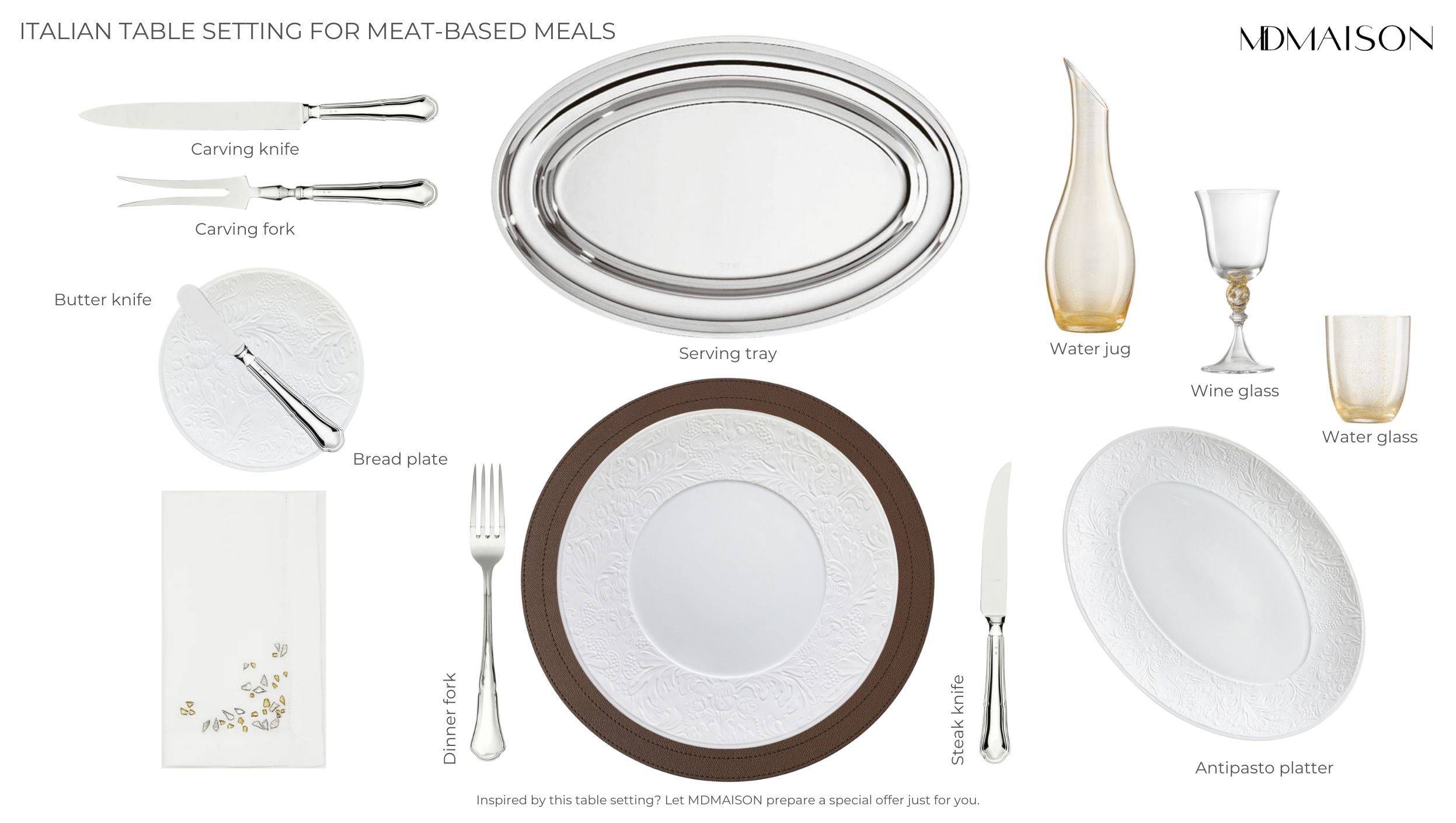
Meat service is a classic Italian table setting, where every detail is built around the food itself, not decoration for visual appeal. Carne service requires a base of a large tablecloth like one from Jesurum, although in many modern variations, you can also see runners paired with placemats. Before the main meal, antipasti set the table: centerpiece bowls or baskets with grissini, along with shared plates of prosciutto, bresaola, cheeses, and olives (e.g. Gourmet serving trays from GioBagnara, Cu Artigiana or Marricreo).
After the antipasto, large personal plates—most often flat, with enough rim space so sauces and sides don’t mix chaotically—fill the table. Classic white porcelain is the primary material, either modestly finished with a gold or platinum rim or decorated with subtle, low-key patterns. In our Italian table setting ideas, we often work with Limoges porcelain collections like Italian Renaissance or Mazurka by Raynaud .
Flatware consists of a quality stainless steel or fine silver-plated set, kept simple with just a meat fork and knife. Next to each plate, there is a sturdy water tumbler and a functional wine glass without extra decoration, since wine is part of the process and the meal itself. The dinner concludes with an espresso service and digestivo glasses of grappa, amaro, or limoncello set on the table.
Italian Table Setting for Seafood and Fish Dishes
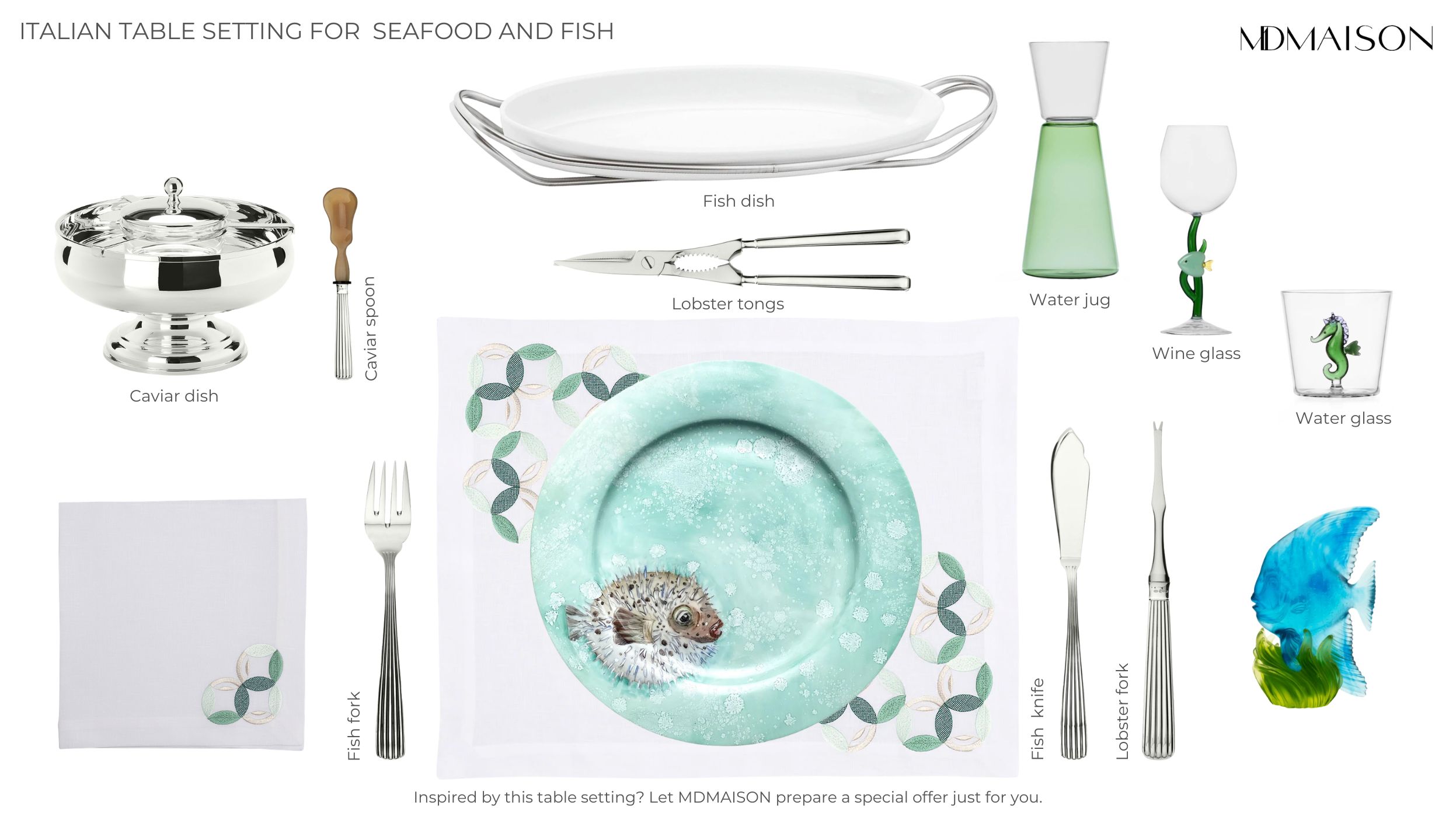
A cena con pesce requires formal dining etiquette and a more structured presentation. Such meals are meant to be special, with a beautiful tablecloth, linen napkins, refined dinnerware, glassware, sometimes a flower vase in the center, and even candles if it’s a holiday.
The selection of antipasti and aperitifs is intentional and restrained, focusing on high-quality marinated or fresh seafood, fish carpaccio, baccalà, anchovies, and octopus, or a light seafood salad. Their plates can be of a special shape and ornate designs, ranging from nautical-themed ceramics and glazed porcelain, to silver-plated serving pieces (e.g. the Christofle Albi platter and Malmaison server, or Viva martellata servers by Greggio). The hosts offer aperitifs on an elegant tray in beautiful classic glasses, with exquisite decor, to highlight the beauty of the evening.
For a fish-focused Italian table setting, the choice of plates is dictated by the texture and the cooking method of the fish. The foundation consists of medium-to-large flat plates in white or neutral tones, possibly featuring green or blue patterns with delicate metallic accents (e.g. Mari Ermi Orbis collection by Elena Satta, Cattin Porcellane Damasco set or Pesci Tropicali line by Grand Tour by Vito Nesta).
The flatware set is selected strictly based on the type of seafood, while shared dishes are served with forks or fish tongs, a wide fork, and a spatula. Great examples are Hering Berlin Ocean knife rests. Typically, the setup includes a white wine glass, a prosecco or champagne flute, and a water glass. After the meal, elegant espresso cups and small dessert bowls with sweets stay on the table.
Italian Table Setting for Pasta Service
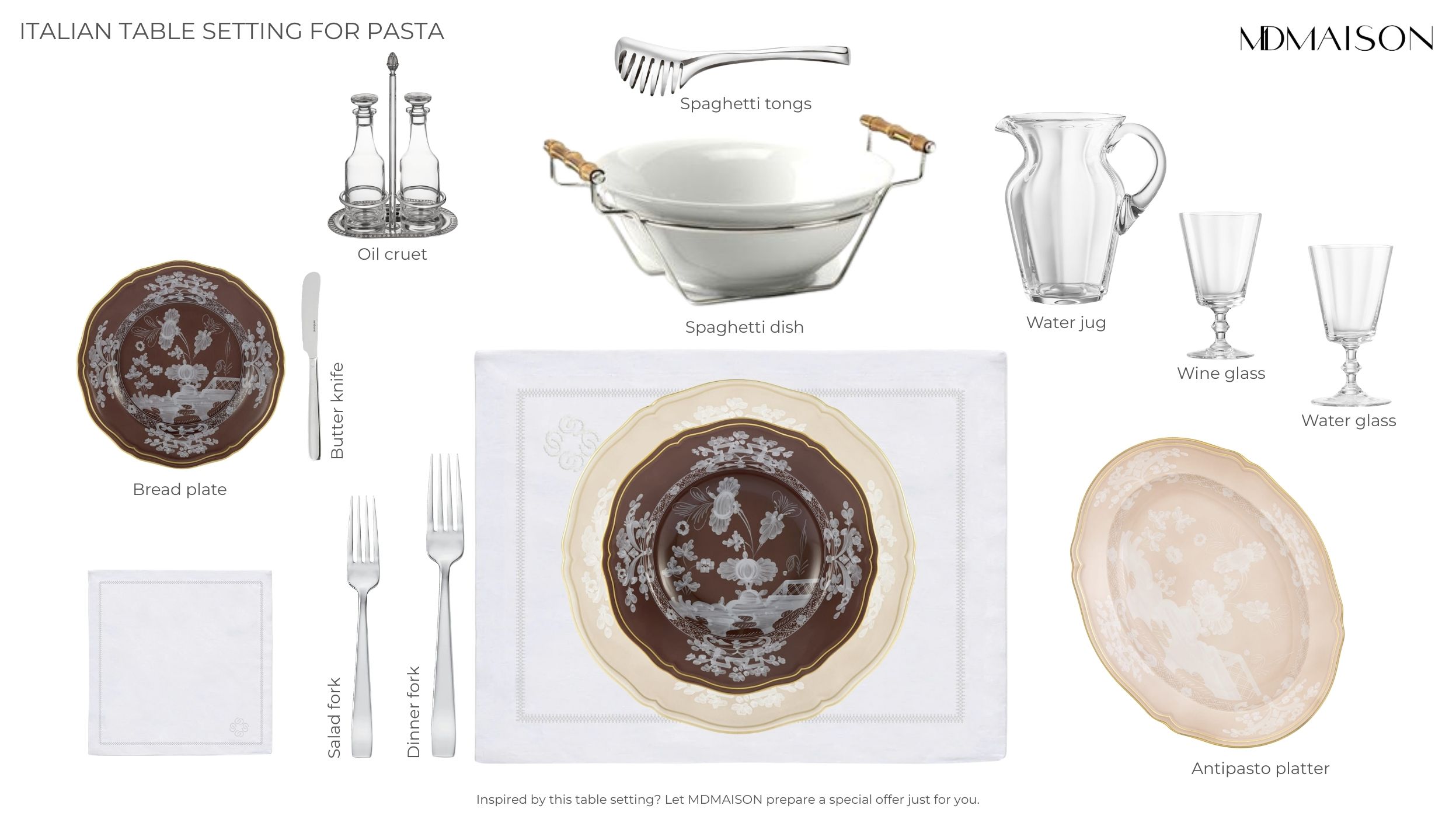
The most traditional Italian table setting is the one for pasta. A wide variety of pasta and dough-based dishes are the favorite foods in this sunny country. There are several dozen dish names and even more variations of fillings and sauces, and each one needs its own style of presentation.
The foundation is, of course, the serving platters for pasta: bowls, deep and semi-deep plates, and flat plates with a shallow center. The serving sequence is straightforward, starting with antipasti plates, followed by a shared salad bowl (e.g. the Idra bowls collection by Nason Moretti, marble bowls Imperfetta by Luce Di Carrara) and individual salad plates for guests. Only afterwards is the pasta brought out and served in individual portions. For their favorite treat, Italians prefer high-quality bone china and porcelain. This style accommodates everything from minimalist white designs to brightly decorated collections (e.g. Fornasetti Astronomici collection, Oriente Italiano dinnerware from Ginori 1735, Tuscia di Lorenza Adami by Sbigoli Terrecotte Firenze ).
Grated Parmesan is the main companion to these hot dishes. It’s served in a small shared bowl ( e.g. grated cheese bowl Impero by Schiavon) or a low dish with a spoon, placed right in the middle of the table. Pasta service flatware consists of a proper fork without a knife, a small sauce spoon when necessary, and tongs if fresh herbs such as arugula are included. The choice of drinks and glassware depends on the specific sauce and the design of the dinnerware, rather than the level of formality. Liqueurs and digestivos such as amaro, grappa, and limoncello are typically served in petite crystal or ornate glasses. To wrap up the meal, your hosts will provide a stylish coffee service with a moka pot for espresso, alongside dessert plates.
Italian Style Table Setting Ideas and In-House Examples by MDMAISON
The beauty of an Italian-style table is its versatility; you can recreate this aesthetic in any location for any event. It involves using vibrant items definitive to the country and its temperament, featuring traditional Italian craftsmanship and style that can immerse you in a Mediterranean vibe—like the stunning, lush Italian dinnerware collections from Richard Ginori 1735, Cessa 1882, Alessi or the sophisticated leather accessories and placemats from Giobagnara, Rabitti 1969, Rudi.
The dominant concept includes light eclecticism and a sense of intentional casualness, with regional references expressed through décor and color palette. This style is a great fit for everything from casual alfresco dinners and summer weddings to birthdays, family get-togethers, and any summer bash.
So, allow us to share some exclusive styling ideas and examples developed by our team at MDMAISON.
Italian Table Décor for a Wedding
An Italian-style table setting is a perfect fit for informal, outdoor summer weddings. We recommend ceramic or porcelain with a warm tone, a colored rim, or hand-painted details, allowing even a light mix to create a sense of a lively table ( e.g. Mirto collection by Elena Satta, Apollo Bianco Set by Coralla Maiuri or Vedute Italiane line by Laboratorio Paravicini ).
Choose cutlery with simple shapes and no excessive decoration. But the glassware should be more striking: chunky colored wine glasses and tumblers in azzurro, green, and amber—hand-cut or mouth-blown—that add depth, sunshine, and a Mediterranean mood to the table (e.g. Tolomeo glasses collection by Nason Moretti, Balloton by Officine di Murano 1295 or Circus in gold and platinum set by Casarialto). Use additional Italian table decor for personalization, such as wine decanters, handwritten place cards, simple ceramic accessories, and bright vases with flowers.
Rustic Italian–Style Table Décor
For lovers of eco-aesthetics and rich tones in their dining space, the Italian rustic style will definitely hit the mark. Just pick some high-quality ceramics or hand-painted porcelain in cream or sand tones, maybe even with colored rims and a reactive glaze (e.g. the Tartan Collection by Coralla Maiuri, Moon by Laab or Pampelonne set by Romarin). And set them on slightly vintage, hand-embroidered linen tablecloths in shades of ochre, terracotta, olive, or mustard (like Giardino Italiano collection by Rivolta Carmignani or Pavone Veronese by Lisa Corti). Italian table setting décor calls for bright, high-quality glassware, and Murano glass fits this context perfectly, while flatware remains simple in form but may feature warm-toned metal or a matte finish.
Italian Table Décor for Christmas
If you want to celebrate Christmas in a special yet homey way, create and experiment with Italian table setting décor. The foundation of this project is a palette of rich red, burgundy, deep green, ochre, and matte gold. Be sure to choose luxurious, richly embroidered tablecloths made of linen or heavy cotton, sometimes with a jacquard texture (e.g a handcrafted set Maison Alia Ski). We recommend choosing a set of white plates with a classic rim, or ceramic plates that still feel festive in tone as Taitù Noel Oro, Versace Holiday, Villari Taormina Oro, Baccarat Arcadia Red. The glassware is a bold mix of colorful water glasses and heavy, faceted crystal in classic shapes—much like the flatware, which should have a warm metal tone, preferably with gilded scrollwork.
Lemon Décor for an Italian-Style Table
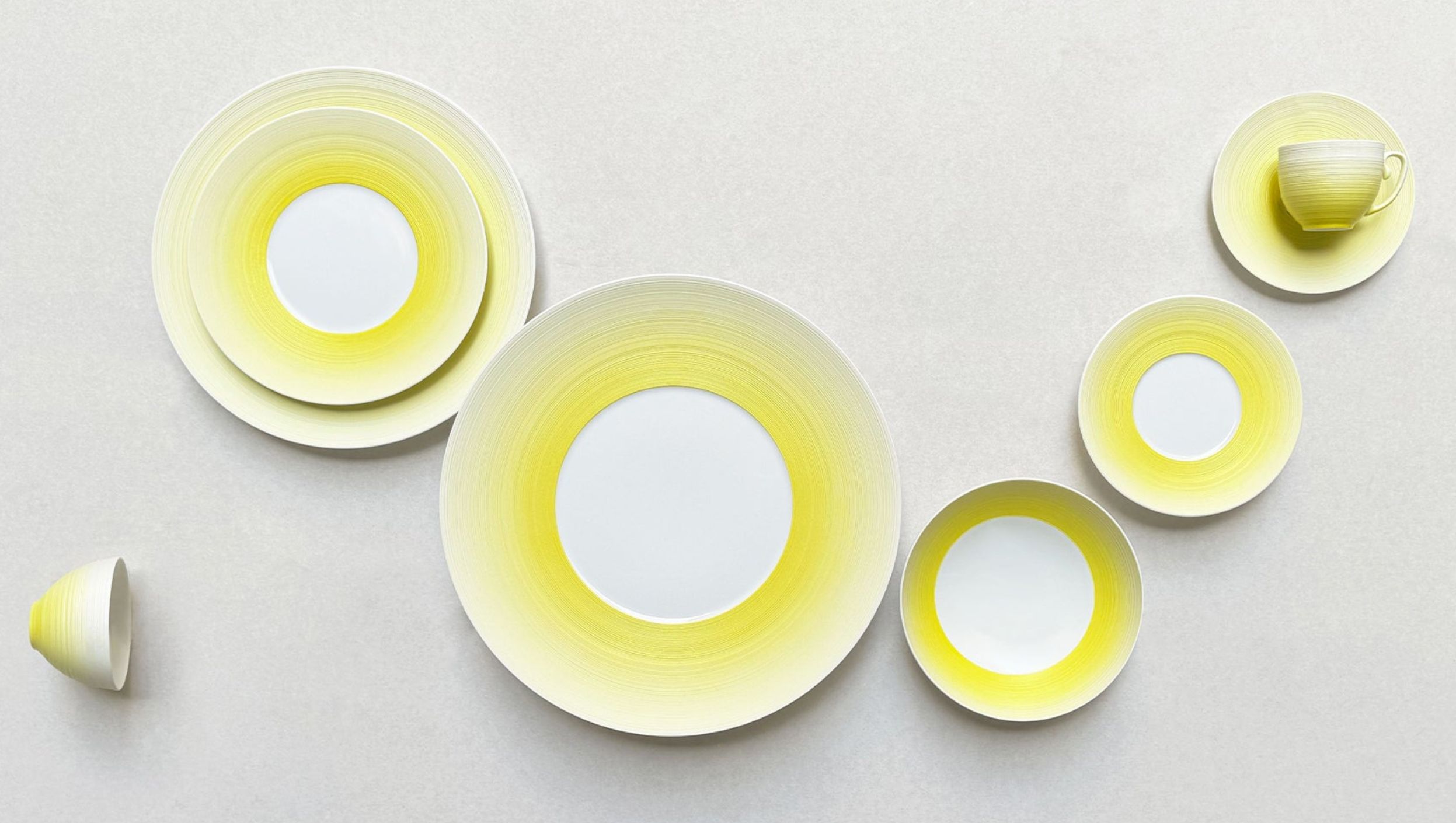
Lemon decor is closely tied to the South, specifically the Amalfi Coast, Sorrento, and the Campania coast in general. Around the world, this visual motif is associated with the broader Mediterranean aesthetic in cuisine, drinks, ceramics, and textiles. A lemon Italian-style table setting is built around yellow, white, green, and cobalt blue, using quality ceramic or porcelain dinnerware with lemon or yellow hand-painted details like Taitù Dieta Mediterranea Fruits collection or Patrizia Italiano Set Filomena Street Vendor of Lemons, paired with colorful glassware like Murano glass Millerighe from Micheluzzi Glass, or Silvio Piattelli Poppy Field Sunrise set and clean, minimalist flatware like the Bali flatware by Ercuis. The tablecloth should match the color palette or be neutrally white (like Siciliano line by Once Milano), allowing ripe citrus arrangements to look natural alongside single branches such as lemon, olive, bay laurel, or eucalyptus.
The Blue Italian Tablescape
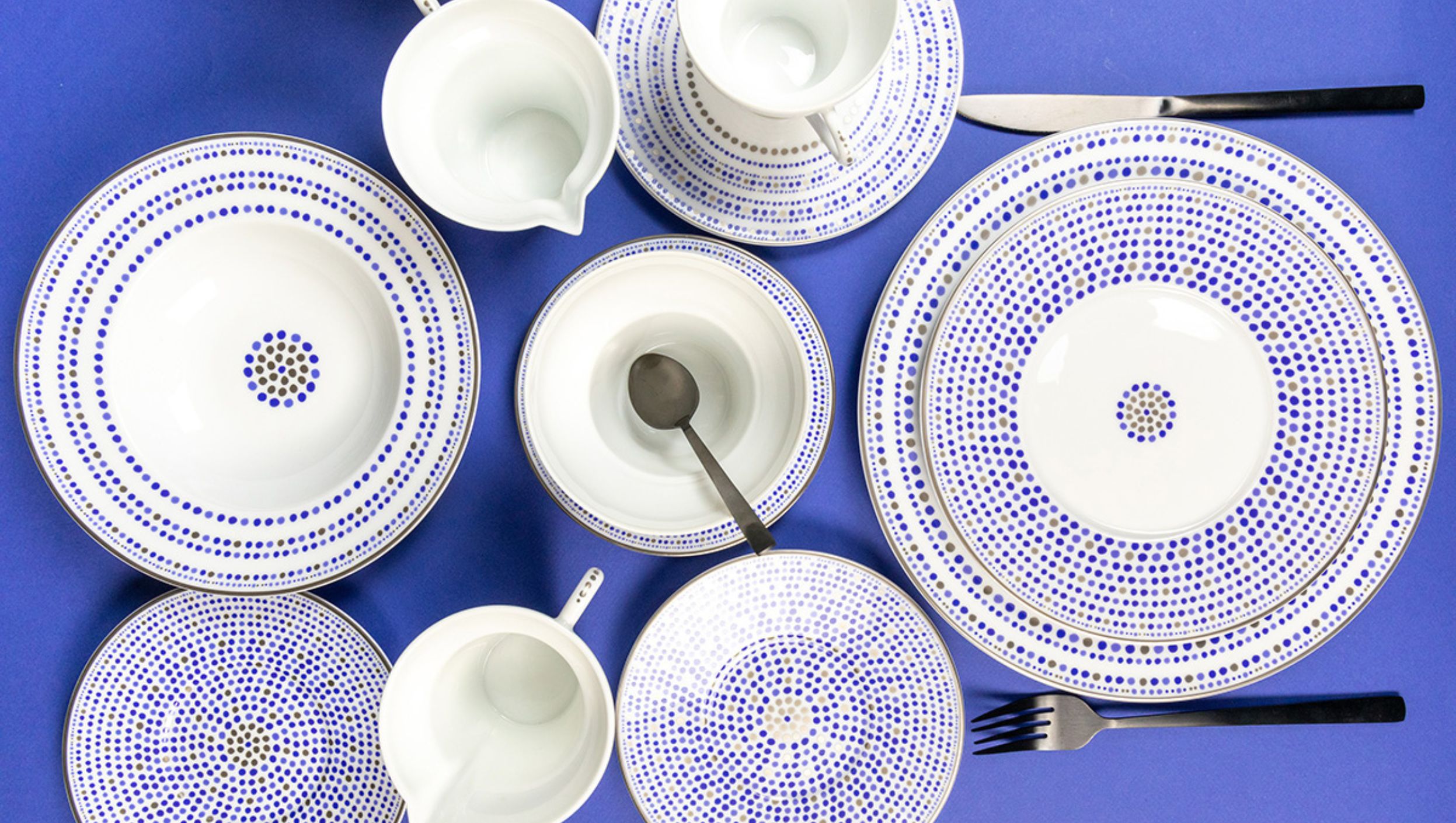
Another key decor code for an Italian table setting is the blue (or azzurro) style. In Mediterranean culture, it’s seen as a nod to the sky and the sea, as well as a symbol of success and victory. Blue decor is especially popular on boats and yachts, for seaside weddings, summer dinners, and Mediterranean concepts. Within blue-focused tablescapes, color is typically woven in via dinnerware and glassware: layering light blue, cobalt, or opal-blue plates with artisanal ceramics, colored stems, and textured bubble glass. Our best examples for dinnerware are Cibelle Motivo Blu Marmorizzato collection, Romarin blu Pampelonne set, Sveva's Home I Dine in Colour line, for glassware Saint Louis Tommy Sky-Blue or Baccarat Harmonie Blue.
The Italian Spaghetti Dinner
Spaghetti dinner Italian table décor is not a canonical format at all, but rather a universal, family-style dinner setup that can be adapted to any country and interior. Use deep or semi-deep plates, pasta bowls, or shallow wide bowls designed to handle sauces comfortably. We can recommend the Piume di Pavone Giallo collection La Bottega del Vasaio or Ginori 1735 Oro di Doccia set. Keep the flatware minimal (e.g. Riflessi set by Zanetto or Vecchia Spagna by Greggio), but include central elements: a bowl of grated cheese, fresh bread, a stack of napkins for everyone, and beautiful, bold, colorful water glasses.
Conclusion
The Italian table setting has a massive following all over the world. You’ll find table settings in this style both in traditional Italian restaurants and in the homes of people who are inspired by the culture of food, shared meals, and celebrations.
Our team at MDMAISON understands all the nuances and fine details of these vibrant, color-rich projects. We invite you to step behind the scenes and start your own exclusive tablescape project or develop a professional luxury home decor concept for your clients.
FAQ
What defines a traditional Italian table setting?
This style focuses on the national food, culture, and the ease of enjoying the meal, rather than formality or over-the-top decor.
How do I choose glassware for an Italian-style dinner?
Glassware should be solid, colorful, and comfortable to use, and include a dedicated water glass and a matching wine glass.
Is Italian table setting formal or casual?
This type of tablescape isn’t strictly formal or strictly casual; it’s very versatile and adapts to the occasion.
Which Italian brands are considered the gold standard for tableware?
The best brands are those with a rich history and a distinctive visual identity that blend national craftsmanship—think Ginori 1735, Cessa 1882, Giobagnara, Villari, Vietri, and Rudi.