Common Mistakes When Buying Tableware for High End Interiors

The Essentials
- In this article, we will explore the topic of deciding tableware for your space, but not from the perspective of rules—rather, from the perspective of making the wrong choices.
- We will examine the most common errors our clients have made and analyze the reasons behind them.
- We will provide recommendations for fixing these mistakes and preventive advice that will help you when buying any set or group for your needs.
Is It Really That Difficult?
Is choosing the right tableware really that difficult? It may be hard to believe, but that is actually the case.
It often happens that a client sees an incredibly beautiful, aesthetic, and sophisticated plate for an astronomical price per piece, which looked so stunning in a store display or on a website, that they fell in love with it. But when it finally ended up on their dining table or in the kitchen, it looked completely out of place.
The thing is, the visual appeal of individual objects doesn’t guarantee their aesthetic compatibility with the space, and just like with glassware and flatware, there are certain rules you need to follow when picking them. In fact, there is a core set of rules for choosing a luxury dinnerware set, and these are the same principles we follow when selecting pieces for our clients. Yes, honestly, the process isn’t simple. Sourcing exquisite tableware today often feels like a quest, with hundreds of brands from Hermès to Bernardaud, endless patterns and delicate materials, and a massive variety ranging from classic gilded bone china to avant-garde designer series. An inexperienced shopper can easily be overwhelmed by the visual appeal and buy items that look great in the box, but ultimately fail to complement the actual architectural backdrop.
Mistake 1: Choosing a Set Outside the Interior’s Style and Context
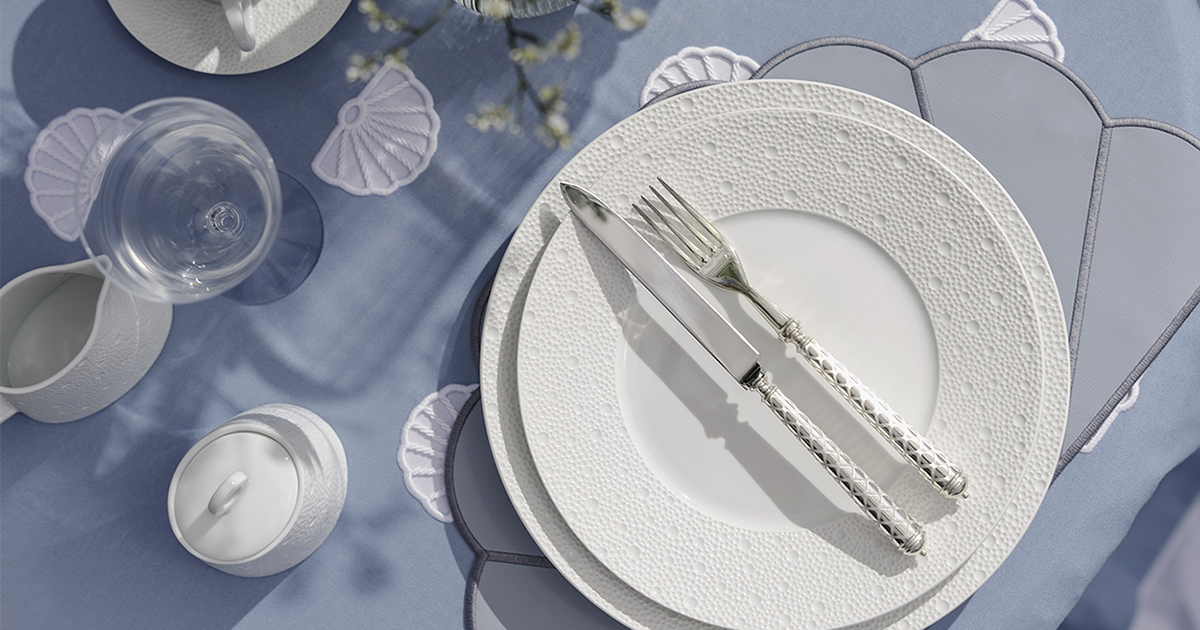
People who zealously follow fashion trends in clothing very often practice the same trend-based acquisitions for their dinnerware. For example, if a limited series from a famous manufactory appears on the market, they immediately add it to their cart without thinking about its stylistic identity. And it’s a big mistake if the texture and decor of the collection do not echo the overall mood of the design scheme and the stylistic concept. In that case, all the chic and elegance vanish, and it ends up looking awkward even in the most classy room.
For yachts and waterfront villas, there’s a specific nautical theme and color palette; hunting lodges demand a totally diverse aesthetic, just as beach houses or luxury cottages do.
Therefore, we suggest always following the general idea of your living-dining area and the scheme as a whole, and determining the direction in which your space breathes, whether it’s classic, Art Deco, Scandi, or Parisian chic. For a thoughtful examination, align the stylistic language with the textures, tonal palette, and architectural elements of the space, while considering furniture hardware, detailing, surface reliefs, materials, and finishes.
If you’re not sure you can navigate the nuances on your own, reach out to the pros who can help you specify your focal point and define which plates, glasses, and forks can be harmoniously integrated and what will look out of place.
Mistake 2: Disregarding the Quality and Prestige of the Collection
The magic of expensive apartments, villas, or yachts is very easy to ruin by setting the table with articles of a lower status or materials that don't quite match. Situations like this occur when buyers, chasing attractive shapes, purchase sets that are visually appealing but of a lower status than the overall interior of the space (for example, poor porcelain composition, casting defects, or low-quality decoration). For instance, when marble floors and finishes, velvet, and genuine leather are paired with sets from Villeroy & Boch, Royal Doulton, KAHLA, or even those Gucci plates. Your guests, especially if they have a trained eye, will immediately notice this aesthetic imbalance, and it can spoil the overall impression of you and your taste.
Mistake 3: Ignoring the Color Balance
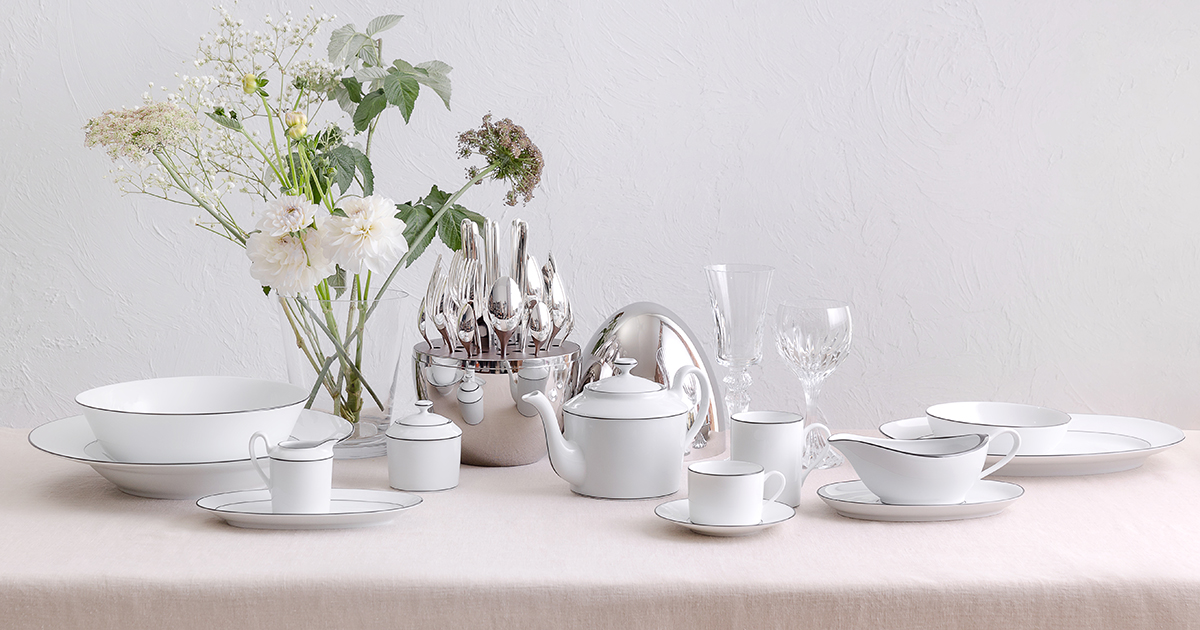
The lack of a color connection between the overall background of the space and the tableware and accessories can lead to a situation where even a very expensive, beautiful set of dishes or glasses feels out of place. It becomes a visual mess that constantly distracts the eye. It is extremely crucial to consider the main shades and dominant colors of the walls, furniture, and textiles when choosing your table-setting elements in order to achieve visual balance. For example, an overly bright dinnerware set with neon or richly watercolor-style decoration, such as the Paraíso collection by Sieger by Fürstenberg, L'Objet Fortuny, or the Rêves du Nil Purple dinnerware collection by Haviland, would look completely out of place in a Scandinavian interior. Just as the mild tones of the Swan collection by J.L. Coquet or the Millefleurs collection by Gien would feel mismatched in a loft-style room.
Among professionals, this is seen as a major faux pas that’s hard to ignore. That’s why when we take on a project, the first thing we do is a color review of the entire space and its details. The safest approach we advise is echoing the main color theme. However, tableware specialists can help you explore more complicated solutions, subtly corresponding pieces to contrasting accents or complementary color additions.
Mistake 4: Brand Mismatches and Status Conflicts
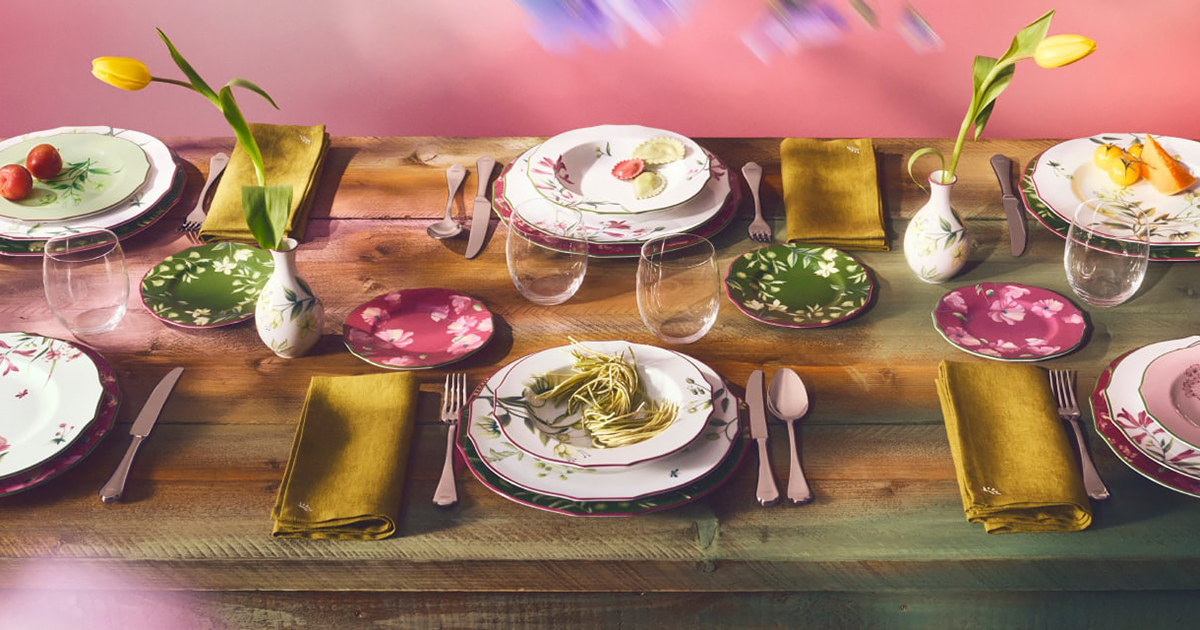
Every tableware collection must perform not only on the same level as the interior but also in harmony with each other. A table setting should recall harmony across the board: not just in color, but in brand heritage and price as well. When world-renowned manufacturers meet random mass-market objects or even mid-range brands on the same tablecloth, the magic of a high-end table setting fades. This balance is necessary when using a "mix and match" strategy—selecting companion sets to complement and diversify the major collection.
Mistake 5: Limited Financial Awareness in the Luxury Market
We’ve often seen buyers overpay for a trendy interior brand that only produces tableware as a sideline. They spend huge sums on plates that are actually just mass-market quality with a logo, missing the chance to own a masterpiece from a legendary manufacturer. But with the same budget, you could own a true treasure — the finest porcelain, hand-cut crystall glass, silver hand-polished cutlery from manufactories that have supplied tableware to royal courts for centuries.
So, if you aren't deeply familiar with the high-end tableware market, take the time to research the history and specs of the groups you like. Or, better yet, ask an expert for advice. They can help you distinguish between trendy new releases and true artisanal objects, finding exclusive luxury pieces that are masterfully crafted and hold real artistic value.
Mistake 6: One Table-Setting Scenario for All Occasions
A rigid attachment to one set of plates, glasses, and cutlery for years, when the same set is used for every occasion, is just as serious a mistake as a mismatch in décor and color. In this context, a conservative method is not advisable. Ideally, you should always have at least two sets for different events. At the same time, you can select compatible pieces that echo each other through a mix-and-match approach for different levels of table settings, and even experiment with how you present diverse dishes.
Our advice is to start with a solid base collection for your daily life. We’ve already shared our thoughts on how to choose dinnerware sets for every type of occasion. Look for gorgeous designs that are tough enough for the dishwasher, so you don't have to worry about using them every single day. At the right moments, this base can be paired with stylistically related but more richly adorned pieces to create a more ceremonial and formal concept on the table. For example, you can operate basic white plates from one collection, with salad or dessert plates from another, more vibrant and accent-focused line. It’s a simple way to give your table a fresh new look on the fly. You can completely change the vibe without the hassle or expense of buying a whole new pack.
Our Checklist for Choosing Tableware Collections
If you’ve decided to navigate the luxury tableware market independently, here is what you need to keep in mind:
- Think about the architectural connection and the alignment of the tableware design with the main stylistic direction of the interior.
- Pay attention to the quality of the materials and choose pieces that match the level of the home’s finishes, keeping collections on the same table at a similar status level.
- Maintain color harmony so the palette of the dinnerware corresponds with the surrounding textiles and interior background.
- Check the status of the brand and choose manufactories with a confirmed reputation and quality.
- At the same time, think about different scenarios and make sure the pieces can be mixed with other collections to create different moods at the table.
Why It’s Sometimes Better to Consult a Pro
Many connoisseurs of fine things prefer not to take risks, delegating the selection of tableware to specialized decorators or freelance professional table stylists who consider everything—from the lighting in your dining room to the wood grain on your yacht’s deck. A pro knows instinctively which Limoges porcelain or crystal silhouettes will vibe with your minimalist space versus what fits an Art Deco aesthetic. They make sure every piece feels like it was made for the room.
FAQ
Should I follow fashionable trends in dinnerware design?
For a refined and high-end interior, experts recommend choosing collections that reflect the concept of your home rather than current trends, so the set does not look outdated in a few years.
Can I mix luxury tableware with more budget-friendly pieces?
This is quite risky, because next to high-end items, cheaper pieces will immediately stand out. To maintain a truly prestigious look, everything on your table should be in the same league in terms of quality and craftsmanship.
What are the potential downsides of purchasing fashion house dinnerware?
Often, fashion brands sell mid-range quality at a luxury price point simply because of the logo. For the same budget, you can invest in pieces from heritage manufacturers that offer superior craftsmanship and true collectible value.